


Rider – Stunt Bike Racing
4.327.07K Reviews
App Specs
- Version
- 3.06.0.05
- Updated On
- License
- Free
- Downloads
- 100,000,000+
- Developer
- Ketchapp
- Categories
- Arcade
- Platform
- Android, iOS
Screenshots
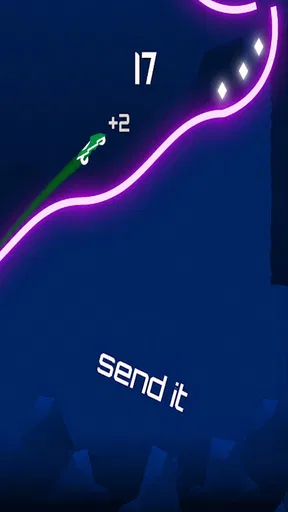




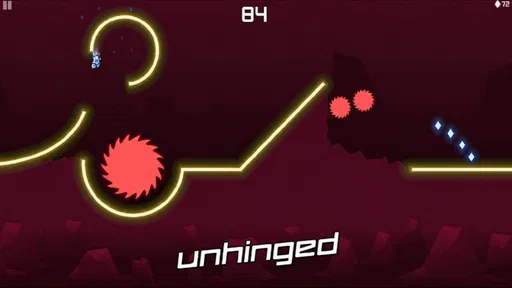


 Analysis by AppCompare
I like arcade games that make sense within a few seconds but still give me a reason to improve, and Rider – Stunt Bike Racing fits that niche. It turns a motorcycle run into a test of timing: you need to keep moving, judge a jump, and decide whether a flip is worth the risk. It is easy to understand, but a clean run takes more care than the bright, breezy presentation first suggests.
That pick-up-and-play appeal is the main reason I’d recommend it to someone who wants a quick phone game rather than a full racing simulation. You can open it for a short break, try to beat your previous performance, and put it down without needing to learn a complicated set of controls. The catch is that its simple premise depends on repetition; if you want deep vehicle tuning, realistic tracks, or a long story, this is probably not the ride you’re looking for.
What the free entry point means
Rider is a free arcade game from Ketchapp, so you can try its core experience without paying upfront. It is rated for Everyone, and the game has an average rating of 4.3 from around 1.5 million ratings, with over 100 million installs. Those figures suggest broad appeal, though they don’t tell you whether its quick retry loop will suit your own taste.
There are in-app purchases, with items listed from $0.99 to $79.99. I’d treat that range as a reason to check any purchase prompt carefully, not as a requirement to enjoy the game. The free entry point makes it easy to test whether you like the timing-based riding before spending anything; paid value depends on what an individual item offers and how much you personally want it. I wouldn’t pay just to find out whether the basic play feels satisfying.
Why the riding loop works
At its best, Rider makes a small decision feel important. Accelerating gets you moving, but a jump asks you to think about your bike’s angle and landing rather than simply holding a button and hoping. A flip can make a run feel stylish and rewarding, yet chasing one at the wrong moment can turn a promising attempt into a crash. That risk-and-reward tension gives the simple controls their purpose.
When I play, I get more out of treating each attempt as a tiny practice session than as a race I must win. I pay attention to what caused a mistake, then try changing my timing on the next run. That approach makes failure useful instead of merely annoying. It also suits brief sessions: even if I only have a few minutes, I can focus on one improvement rather than needing to finish a long event.
Where it fits among arcade racers
Compared with arcade racers built around steering through a conventional course, Rider puts more emphasis on controlling a bike in the air and landing safely. That gives it a different rhythm from a traffic-dodging game or a traditional lap-based racer. It is closer to a compact stunt challenge: the satisfaction comes from balancing momentum and acrobatics, not from managing a garage or learning a detailed racing setup.
Worth Reading Before You Choose

Baby Panda World Brings Quick Play to Modern Phones, but Its Game Library Feels Busy

ESPN’s Live Game View Makes Following Close Games Easier

QuizzLand Review: A Good Fit for Short Trivia Breaks, Not Every Player

Basketball Stars: Multiplayer Is Fast, but Can It Recover When Matches Go Wrong?

WEBTOON Turns Phone Updates Into a Better Reading Routine

Link to Windows Runs on Shared Habits, Not Social Feeds
That focus is a strength when I want a quick, tactile challenge, but it narrows the audience. Players who enjoy building a vehicle, choosing a route, or competing through longer structured races may find the repeated runs too limited. I’d choose a deeper racing game for those needs; I’d choose Rider when I want a direct test of timing that I can understand at a glance.
Who is likely to get value from it?
A realistic use for Rider is a short wait: I can start a run while a kettle boils or while I’m waiting for a ride, then stop after a few attempts. The game’s basic premise doesn’t demand a long commitment, and its quick restarts make it easy to return to a tricky moment with a fresh try. If you like chasing a cleaner run and learning through small corrections, that can be satisfying without turning the game into a major time investment.
It is a better fit for players who enjoy repeating a challenge than for anyone who becomes frustrated by crashes or wants steady progress through a story. I’d also skip it if you’re looking for realistic motorcycle handling: the appeal here is arcade timing and stunt control, not a simulation of riding on real roads. For a child or family device, the Everyone age rating is reassuring, but I’d still keep an eye on purchase prompts, particularly if the device is shared.
Small habits that make attempts more useful
One practical tip is to resist treating every jump as an invitation to flip. A stunt is only satisfying if you can bring the bike down under control, so I’d first learn the timing of a landing and add more ambitious rotations once that feels dependable. If a crash happens, remember the moment you committed to the stunt; adjusting that one decision is often more useful than tapping faster throughout the next run.
It also helps to set a modest goal before opening the game: practise a controlled landing, improve a personal run, or simply play for a few minutes. Without a goal, the retry loop can blur into “one more go” longer than intended. The game is at its most enjoyable for me when I treat each run as a short experiment, not when I expect every attempt to deliver a new kind of content.
Getting Started with Rider
First things first, let’s talk about the setup. Rider is super easy to get into. You download it, fire it up, and you’re greeted with a slick, neon-drenched interface that just screams cool. The controls are straightforward – tap to accelerate, release to brake. But don’t let the simplicity fool you. Mastering these controls is a whole other ball game.
The game kicks off with a tutorial that gets you up to speed in no time. You’ll find yourself zooming down tracks lined with loops, jumps, and all sorts of obstacles. And yes, you will crash. A lot. But that’s part of the fun, right?
The Thrill of the Ride
What really sets Rider apart is the sheer thrill of the gameplay. Each track is procedurally generated, meaning you never quite know what’s coming next. One minute you’re soaring through the air, pulling off a perfect backflip, and the next, you’re trying to avoid a catastrophic wipeout. The unpredictability keeps you on your toes and makes every ride feel unique.
And let’s not forget about the stunts. Oh, the glorious stunts. Pulling off flips and spins not only boosts your score but also fills you with that sweet sense of accomplishment. It’s like being Evel Knievel, but without the broken bones.
Unlockables Galore
If you’re a fan of collecting things, you’re in for a treat. Rider is packed with a plethora of bikes to unlock, each with its own unique style. Whether you’re into sleek, futuristic designs or something more rugged and retro, there’s something here for everyone. And the best part? You can earn them just by playing. No need to spend a dime if you don’t want to.
The game also features a bunch of challenges to complete, which is a nice way to keep things fresh. These challenges range from simple tasks to skill-based feats that will test your mettle. Completing them not only rewards you with in-game currency but also gives you that extra bit of bragging rights.
Visuals and Soundtrack
Now, let’s talk aesthetics. Rider is a visual treat. The neon colors and minimalist design give it a modern, yet timeless feel. It’s like being inside a virtual Tron world, but with bikes instead of light cycles. The animations are smooth, and even during those inevitable crashes, everything looks and feels polished.
The soundtrack is another highlight. It’s packed with synth-heavy beats that perfectly complement the fast-paced action. If you’re like me, you’ll find yourself nodding along to the music as you race through the levels.
What to expect from a longer session
The game’s appeal is immediate, but I find the first few minutes and a longer stretch of play can feel quite different. Early on, learning how the bike responds is engaging because every jump offers a fresh chance to understand the timing. Later, the same quick cycle of acceleration, stunt, landing, and retry can become familiar. That is not a flaw for a snack-sized arcade game, but it does mean I would not choose it as my only game for a long evening.
Its changing runs help preserve a little uncertainty, while the challenge and bike-collecting elements give me reasons to return. Still, variety in the moment is not the same as a broad range of modes. If I want a carefully paced campaign, a large set of racing formats, or a social competition to organize a session around, I would look elsewhere. Rider works best when I want the central skill to stay in focus.
Choosing a sensible way to play
On a phone, the one-touch control idea is convenient because it keeps the screen focused on the track and the bike. It also makes precision the main hurdle: a small change in when I press or release can matter more than frantic input. I get better results when I watch the bike’s position through a jump rather than concentrating only on the score. That is a useful habit for anyone who tends to over-correct after a near miss.
For a shared device, I’d make the purchase decision separately from the play decision. Free access is enough to discover whether the basic loop is enjoyable, while in-app items are optional spending rather than a reason to assume the game is pay-to-play. Since the listed purchase range stretches from $0.99 to $79.99 per item, I’d avoid tapping through checkout casually and would use the device’s purchase controls if children might play. That keeps the low-commitment appeal intact.
Compatibility and the practical choice
The game’s current version is 3.04.0.05, and it requires Android 7.0 or later. That makes the minimum requirement worth checking before installing on an older Android phone or tablet. The game is free to download, so the most practical test is straightforward: if your device meets the requirement, try the basic riding and decide whether the repetition feels rewarding before considering any optional purchase.
Its popularity is substantial, with more than 27,000 written reviews alongside the large rating count, but popularity is not a substitute for fit. I’d use those numbers as context, then judge it by the feel of the controls and the patience I have for retrying. If those two things click, there is a solid little arcade pastime here; if they don’t, a conventional racer with clearer courses or a slower progression system will likely suit you better.
Visual style, sound, and playing in short bursts
The neon look is more than decoration: it gives the track and bike a clear, graphic identity that suits the game’s quick decisions. The soundtrack’s synth-heavy character reinforces that arcade mood, although anyone who prefers quiet play can treat the music as a personal preference rather than a reason to stay. I would not let the presentation alone decide whether to keep playing; the decisive question is whether landing a stunt feels satisfying enough to invite another attempt.
That makes Rider easy to fit into small gaps in the day, but also easy to overrun a planned break with. I sometimes set a stopping point before I start, because the short-run structure makes another attempt feel harmless. If I’m tired or impatient, though, repeated crashes can turn a relaxing distraction into irritation. It is better as a focused little challenge than as background entertainment while I’m trying to do something else.
Final Thoughts
So, is Rider worth your time? Absolutely. It’s one of those games that you can pick up for a quick session or get lost in for hours. The combination of addictive gameplay, stunning visuals, and a killer soundtrack makes it a must-try for anyone who enjoys arcade-style racing games.
Whether you’re a casual gamer looking for some quick fun or a hardcore player chasing high scores, Rider has something for you. So, gear up, hit the track, and see how far you can go. Just remember to hold on tight, because this ride is one wild adventure.
My buy-or-skip verdict
I’d try it if I wanted an arcade game that asks for quick reactions and rewards deliberate practice, especially if I enjoy learning a compact skill rather than progressing through a story. The free starting point is a genuine advantage: I can judge the play for myself before deciding whether any optional item is worth considering. With an Everyone rating, it is also an approachable choice for a family device, provided purchases are handled thoughtfully.
I’d skip it if repeated attempts feel like chores, if I want a realistic bike model, or if collecting alternate looks and chasing better runs do not motivate me. The game has a clear identity, but that identity is narrow by design. For my own quick-break rotation, that focus is a plus; for someone wanting a deep racer, it is the reason to choose something else.
Pros
- Intuitive controls make gameplay accessible.
- Variety of bikes to unlock and upgrade.
- Challenging levels keep it engaging.
- Smooth and appealing graphics.
- Frequent updates with new content.
Cons
- Ads can be intrusive between levels.
- In-app purchases can be pricey.
- Requires stable internet connection.
- Limited customization options for bikes.
- Some levels can be repetitive.
FAQs for Rider – Stunt Bike Racing
What are the main features of Rider – Stunt Bike Racing?
Rider – Stunt Bike Racing offers a thrilling experience with its extensive range of bikes and customizable features. Players can perform jaw-dropping stunts across various challenging tracks. The game includes a leaderboard to compete with friends, daily challenges, and a user-friendly interface that enhances gaming enjoyment.
Is Rider – Stunt Bike Racing free to play?
Yes, Rider – Stunt Bike Racing is free to download and play. However, it offers in-app purchases to enhance the gaming experience. Players can buy new bikes, unlock special tracks, and remove ads. These purchases are optional and not necessary to enjoy the game.
What are the system requirements for Rider – Stunt Bike Racing?
For Android users, Rider – Stunt Bike Racing requires Android 5.0 and up. For iOS users, the game is compatible with iOS 10.0 or later. It’s essential to ensure your device meets these requirements for optimal performance and to avoid any gameplay issues.
Does Rider – Stunt Bike Racing require an internet connection?
Rider – Stunt Bike Racing can be played offline, allowing users to enjoy the game without an internet connection. However, certain features like leaderboards and daily challenges require connectivity. Playing online also enables you to download updates and access new content.
How does Rider – Stunt Bike Racing ensure user privacy?
Rider – Stunt Bike Racing respects user privacy by adhering to strict data protection policies. The app only collects necessary data to enhance gameplay and improve user experience. Players can review the privacy policy within the app to understand how their information is used and managed.


